
Hybrid mismatch rules explained: a practical guide for multinational and UK businesses

What are the hybrid mismatch rules?
The UK’s hybrid mismatch rules are part of international efforts to tackle tax avoidance and ensure fair taxation across borders. These rules are especially relevant for groups with international operations, as they aim to prevent tax advantages arising from differences in how countries treat financial instruments and entities.
How do hybrid mismatches occur?
Hybrid mismatches occur when two countries treat the same financial instrument or entity differently for tax purposes. This can result in unintended tax benefits, such as multiple deductions for a single expense or deductions being claimed in one country without corresponding taxable income in another.
Examples of hybrid mismatches
Example 1: hybrid financial instrument mismatch
A company issues a financial instrument (typically a loan) that is treated as debt in the UK, allowing interest payments to be deducted for tax purposes. But in the recipient’s country, the same instrument is treated as equity, and the payments are considered tax-exempt dividends. This creates a hybrid financial instrument mismatch ie the interest is deductible in one country, but not taxable in the other.
Example 2: hybrid entity mismatch
A business entity may be treated as tax-transparent in one country, so its income is taxed in the hands of its owners, but as a separate taxable person in another. This is a hybrid entity and can lead to double deductions or untaxed income.
Hybrid mismatches can also apply to arrangements involving permanent establishments, hybrid transfers, and dual resident companies.
UK rules on hybrid mismatches
The UK’s rules aim to neutralise the effects of the mismatches and align with the OECD’s final recommendations on Action 2 of the Base Erosion and Profit Shifting (BEPS) project.
How do the hybrid mismatch rules work?
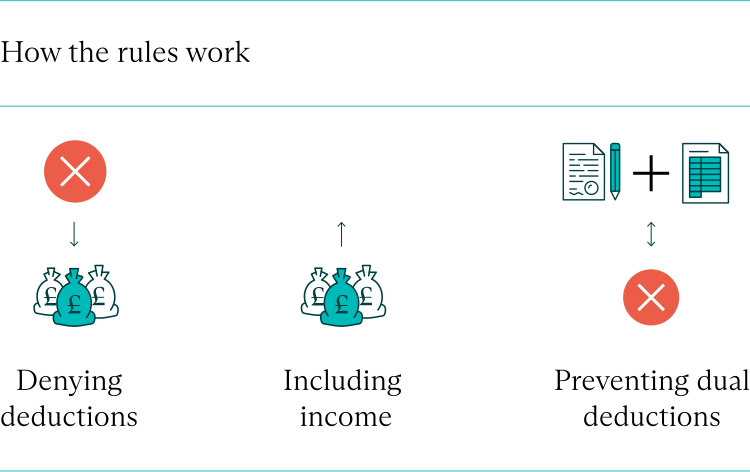
The UK hybrid mismatch rules are complicated and apply automatically when certain conditions are met, regardless of whether there is any intent. They work by removing the tax advantage created by the mismatch through measures such as:
- Denying deductions: if a payment is deductible in the UK but not taxed in the recipient’s country, the UK may disallow the deduction,
- Including income: if a payment is not deductible in the payer’s country and also not taxed in the recipient’s country, the recipient may be required to treat it as taxable income, and
- Preventing dual deductions: if an expense is deducted in two countries without corresponding taxable income, one of the deductions may be denied.
Identifying potential hybrid mismatches
These rules can affect financing arrangements, entity structures, and tax planning strategies. Businesses must be proactive in identifying and addressing potential mismatches.
There are several other areas of the UK tax system that may limit the ability to claim interest deductions. These include the transfer pricing rules, the corporate interest restriction, and targeted anti-avoidance measures.
Impacts of the hybrid mismatch rules on businesses
If your business operates internationally, these rules could have a direct effect on your tax position. Key implications include:
- The requirement for disclosures in corporation tax returns,
- The need to review cross-border arrangements to identify and manage hybrid mismatches,
- Potential denial of deductions, increased taxable income and penalties if there’s non-compliance, and
- Reconsidering international structures and financing to avoid unintended tax consequences.
Hybrid mismatch compliance requirements
Understanding and complying with the hybrid mismatch rules is essential to avoid disputes with HMRC and maintain robust tax governance.
How Saffery helps multinational businesses comply with the hybrid mismatch rules
Our team of corporate tax specialists can support you in complying with the hybrid mismatch rules.
Our services include:
- Tailored reviews of your cross-border arrangements to identify potential mismatches and assess compliance risks.
- Support with documentation and disclosures to meet HMRC requirements and reduce the risk of penalties.
Whether you’re planning a new structure or reviewing existing arrangements, we can assist you.
Get in touch
Latest Insights

National Minimum Wage and employer-provided accommodation: NMW accommodation offset rules (2026-27)