For rural businesses, weather has always been a critical operational issue. Increasingly, however, it’s becoming a long-term strategic one where financial health or even survival depends on addressing the problems created by our changing climate.
Across the UK, landowners are increasingly facing both flooding and water scarcity, creating challenges for soil health, agricultural productivity, estate management and long-term financial planning.
The Environment Agency has highlighted that climate change is contributing to increasingly volatile weather patterns, characterised by wetter winters, hotter and drier summers, and more intense rainfall events. It has also warned of growing pressure on water resources and flood management systems in the years ahead.
What we’re seeing on the ground
One theme we’re increasingly seeing across the rural sector is water management. Landowners are facing growing challenges at both ends of the spectrum, from periods of prolonged rainfall and flooding to extended dry spells and water shortages. As a result, more businesses are exploring ways to improve resilience and reduce reliance on increasingly unpredictable weather patterns.
This has led to greater interest in infrastructure projects such as reservoirs, boreholes and other water storage solutions that may help provide greater control over water availability. Such projects can also involve a range of planning, regulatory and environmental considerations alongside the commercial investment required. Some clients are derisking by selecting water resilient crops of varieties, including ones that mature faster. There also actions such as planting shelter belts, practicing crop rotations, and manure incorporation that build organic matter.
Water is becoming a strategic asset
Concerns around water availability are becoming much more widespread, no longer limited to traditionally water-stressed regions.
The Environment Agency warns that England is likely to experience more frequent and severe droughts alongside increasing flood risks associated with changing rainfall patterns.
At the same time, industry bodies are highlighting the growing importance of water storage infrastructure. The Country Land and Business Association (CLA) has called for reforms to support the development of on-farm reservoirs, arguing that greater water storage capacity will be essential as drought conditions become more frequent.
For some businesses, this means exploring the construction of reservoirs capable of capturing winter rainfall for use during dry summer months. Others are considering boreholes, irrigation upgrades or collaborative water-sharing arrangements.
Rather than viewing these projects as operational investments alone, many landowners are beginning to treat water management as a long-term business resilience issue.
Working with the landscape
Investment in resilience is not limited to engineered solutions.
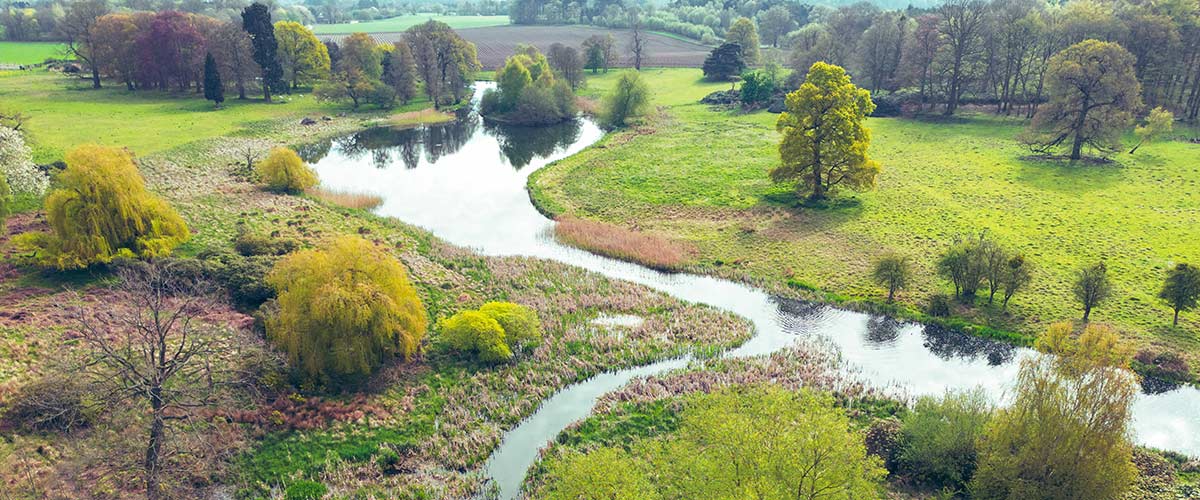
Many landowners are also considering how natural capital projects can help improve water management while delivering wider environmental benefits.
Wetland creation, habitat restoration and natural flood management schemes can support flood resilience, enhance biodiversity and create opportunities within emerging environmental markets.
Our recent analysis of HMRC’s guidance on ecosystem service payments explored how biodiversity enhancement, nutrient mitigation and other environmental markets continue to develop for landowners.
The role of natural flood management also featured in our interview with environmentalist and author Ben Goldsmith, where he discussed how wetland creation can support both environmental objectives and flood resilience.
Tax considerations: what tax and structuring issues should landowners consider?
Water resilience projects often involve significant capital investment and long-term planning. Whether constructing a reservoir, drilling a borehole or investing in wider water management infrastructure, it’s important to consider the tax implications alongside the operational and environmental benefits.
The position will vary depending on the nature of the project and the ownership structure involved, but landowners may need to consider:
- Capital allowances and available reliefs,
- VAT treatment of construction and operating costs,
- Grant funding and associated tax treatment,
- Business structures and ownership arrangements,
- Future inheritance tax planning, and impacts on current planning, including use of reliefs such as Agricultural Property Relief (APR) and Business Property Relief (BPR).
Early advice can help identify opportunities, avoid unexpected costs and ensure projects support wider business and succession objectives. Specialist advice can be particularly valuable where significant capital investment is planned.