

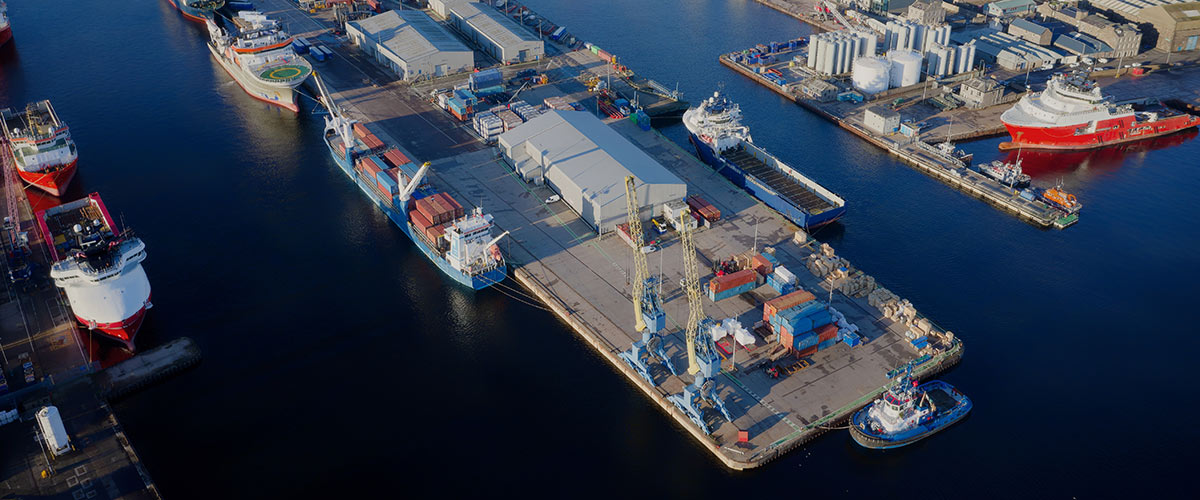
Freeports, including Green Freeports in Scotland, are a key part of the UK government’s strategy to drive regional growth and attract investment into areas that have in recent history seen lower levels of economic activity.
Understanding the potential tax and customs advantages of being within a Freeport can make a significant difference to a business’s profitability and expansion plans.
What are Freeports?
Freeports are designated areas across the UK intended to stimulate economic growth, attract investment, and create jobs. The government promotes them as having a combination of world-class air and sea port infrastructure together with a package of tax and customs incentives, making them highly attractive for businesses looking to expand and for overseas investors.
There are currently 12 Freeports in the UK, including Thames and Solent in England and Inverness and Cromarty Firth and Forth Green Freeports in Scotland. Each site is tailored to regional strengths such as innovation, advanced manufacturing and renewables.
Freeports operate through two key zones:
For more details of where these sites are see the government’s collection of Maps of Freeports, Freeport customs sites and Freeport tax sites.
What are the tax advantages of Freeports?
Businesses operating within Freeport tax sites can access the following reliefs, subject to meeting qualifying conditions.
Tax relief on land and property purchases
Freeports across the UK offer land tax relief for businesses purchasing qualifying non-residential land and buildings in designated Freeport tax sites, but the type of tax, the specific rules for claiming the relief and the duration of the relief vary by nation. The basic rules for full and partial relief are the same everywhere:
- Full relief applies on the total purchase price if at least 90% of the purchase price is for qualifying land or buildings,
- Partial relief applies if at least 10% of the purchase price is for qualifying land or buildings, and
- No relief is available if less than 10% of the total purchase price is for qualifying land or buildings.
However, there are important differences:
- In England relief applies to Stamp Duty Land Tax (SDLT) and is available from the date tax site designation takes effect until 30 September 2031.
- In Scotland relief applies to Land and Buildings Transaction Tax (LBTT) and is expected to be available from the date tax site designation takes effect until 30 September 2034.
- In Wales relief applies to Land Transaction Tax (LTT) and is expected to be available from the date tax site designation takes effect until 30 September 2034.
Enhanced capital allowances
Companies investing in qualifying new plant and machinery within designated Freeport tax sites may be able to benefit from a 100% enhanced capital allowance (also known as a first-year allowance). This means the full cost of qualifying plant or machinery may be able to be written off against taxable profits in the year of purchase, providing an immediate cash flow advantage.
Relief is available for qualifying expenditure incurred from the date a tax site is designated until 30 September 2031 for English Freeport tax sites and 30 September 2034 for Scottish Green Freeport and Welsh Freeport tax sites, provided conditions are met.
For more on tax relief available for the cost of capital assets generally see our capital allowances article.
Enhanced structures and buildings allowances
Businesses buying, constructing, converting or renovating non-residential structures or buildings within designated Freeport tax sites may be able to benefit from a 10% per year structures and buildings allowance (SBA) for up to 10 years, instead of the usual 3% rate.
Relief is available for qualifying expenditure incurred from the date a tax site is designated until 30 September 2031 for English Freeport tax sites and 30 September 2034 for Scottish Green Freeport and Welsh Freeport tax sites, provided conditions are met.
Employer National Insurance Contributions relief
Employers with business premises in a designated tax site may be able to apply a zero-rate of secondary Class 1 National Insurance Contributions (NICs) on the earnings of up to £25,000 per year of new employees for up to three years. The employee must:
- Spend at least 60% of their working time in a single designated tax site,
- Have started their employment between 6 April 2022 and:
- 30 September 2031 for English Freeport tax sites, or
- 30 September 2034 for Scottish Green and Welsh Freeport tax sites, and
- Have not been employed by the same employer or a connected employer in the previous two years.
Business Rates relief
New businesses and some businesses when they expand within a Freeport tax site may be eligible for full business rates relief in England and full non-domestic rates relief in Scotland and Wales. The relief applies for five years from the point at which the business first receives relief and can be first claimed from the date tax site designation takes effect until 30 September 2031 in England and expectedly until 30 September 2034 in Scotland and Wales.
Customs and VAT benefits
Businesses operating in a customs site authorised to use the Freeport customs special procedure may benefit from:
- Suspension of customs duty, import VAT and excise duty while goods remain under the procedure
- No duty or VAT on goods re-exported from the Freeport
- Simplified import and export declarations and processes
- Deferral of duty and VAT until goods enter UK free circulation
- Suspension of trade remedies such as anti-dumping duties
- Zero-rating of eligible supplies of goods and related services between authorised businesses within the customs site
- Zero-rating on exports from the customs site if conditions are met.
Compliance and HMRC guidance
HMRC’s Guidelines for Compliance: Help with Freeports (GfC14) provide details on qualifying for the reliefs and benefits and how to avoid common errors. Key ways to reduce the risk of errors and therefore penalties include:
- Keeping accurate records to support claims
- Understanding the qualifying conditions for the various reliefs
- Ensuring clear communications with the customs site operator.
How Saffery can help
Freeports present exciting opportunities but navigating the rules can be complex. From assessing eligibility to claiming reliefs and managing compliance, expert advice is essential. Our team can help you:
- Identify qualifying activities and sites
- Optimise tax relief claims
- Ensure compliance with HMRC requirements.
If you’re considering investment in a Freeport, including Green Freeports in Scotland, or want to understand how these incentives could benefit your business, please get in contact.
Contact us

Partner, Inverness
Key experience